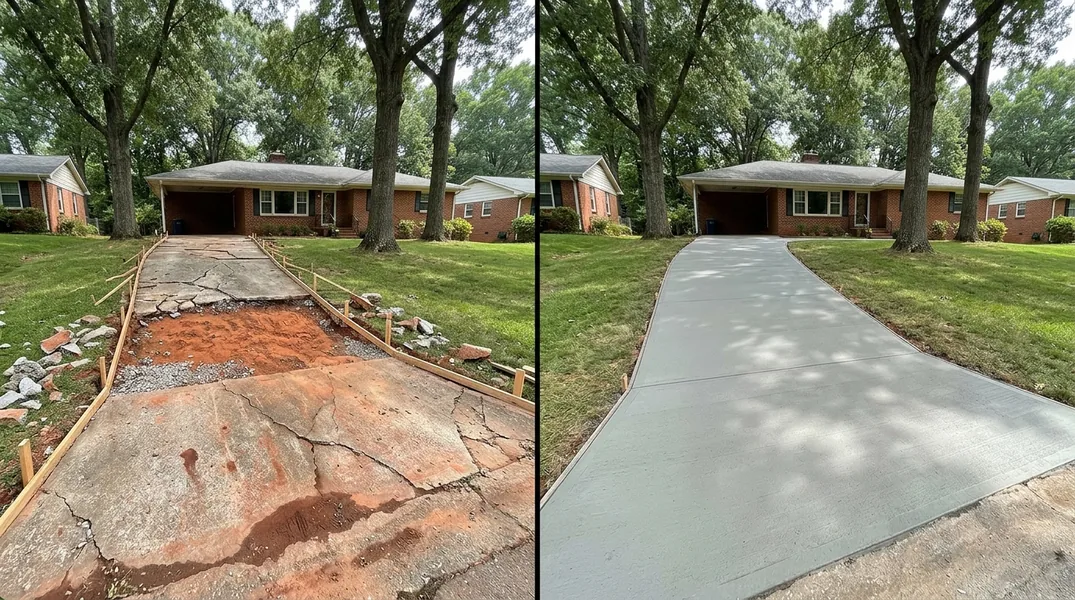
Why Timing Matters for Concrete Pouring in Charlotte
If you're planning to install Concrete Driveways or other concrete work in Charlotte, you might assume that concrete can be poured any time of year. The reality is more nuanced. The timing of your concrete pour directly impacts how well your finished surface cures, how long it lasts, and whether it develops cracks or other defects. Charlotte's unique climate, with its hot, humid summers and mild winters, creates specific challenges that homeowners and contractors must plan around.
Concrete is a material that requires precise conditions during its curing phase. When concrete is first poured, it begins a chemical process called hydration, where water and cement combine to create the hard, durable surface you rely on. This process is sensitive to temperature, moisture, and humidity levels. Pour concrete in the wrong season, and you risk premature cracking, uneven curing, discoloration, or a surface that doesn't reach its full strength. Understanding when to pour concrete in North Carolina is essential for protecting your investment and ensuring your project stands the test of time.
Spring: The Ideal Season for Concrete Work
Spring, particularly mid-April through May, is widely considered the best time to pour concrete in Charlotte and the surrounding region. During this period, daytime temperatures typically range from 65 to 75 degrees Fahrenheit, which is close to ideal for concrete curing. The mild weather allows the concrete to cure at a controlled, steady pace without the stress of extreme heat or cold. Spring also brings moderate rainfall, which can actually benefit the curing process when managed properly, as moisture helps the concrete hydrate gradually and develop maximum strength.
Another advantage of spring pouring is that the concrete will have several months of favorable weather ahead to fully cure before the intense heat of summer arrives. A typical concrete slab needs about 28 days to reach most of its design strength, but curing actually continues for months and even years. By pouring in spring, your new Concrete Patios, driveways, or other surfaces will have plenty of time to develop properly before facing the challenges of summer humidity and heat. Homeowners who schedule their projects during spring often report fewer issues with cracking and surface defects compared to other seasons.
Summer Heat and Humidity: Challenges for Concrete Curing
Summer in Charlotte brings intense heat and high humidity, both of which complicate the concrete pouring process. Temperatures regularly exceed 85 degrees Fahrenheit, and humidity levels can climb above 70 percent. This combination accelerates the evaporation of moisture from the concrete surface, which can cause it to cure too quickly and unevenly. When concrete dries too fast, the outer layer hardens before the interior has fully cured, leading to surface cracks, scaling, and reduced durability. The challenge of concrete curing in humid heat is one of the primary reasons contractors often avoid scheduling major pours during peak summer months.
If you must pour concrete during summer, a professional concrete contractor in Charlotte will take extra precautions to manage the process. These may include keeping the subgrade and forms wet before pouring, using cooler water in the concrete mix, applying shade cloth to slow evaporation, and misting the surface with water during the initial curing period. However, these mitigation measures add time, labor, and cost to your project. For most homeowners, waiting until spring or fall is a more practical and economical choice than battling the summer heat and humidity.
Fall: A Secondary Window for Concrete Projects
Early fall, from September through October, offers a second-best window for pouring concrete in North Carolina. As summer heat fades and temperatures drop back into the comfortable 70s, conditions become more favorable for concrete curing. The humidity levels also tend to be slightly lower than summer, though still present. Fall pouring gives your concrete several weeks of mild weather before winter arrives, allowing initial curing to progress without the stress of extreme temperatures.
The main drawback to fall pouring is that winter will arrive before your concrete has reached full maturity. While concrete can cure in cold weather, the process slows significantly, and freezing temperatures can damage concrete that hasn't fully hardened. If you pour in late October or November, your concrete may still be vulnerable when the first hard freeze arrives. For this reason, fall works best for projects poured earlier in the season, when there's a clear buffer of mild weather before winter weather sets in. If you're considering a fall project, discuss the timing carefully with your contractor to ensure the concrete will have adequate time to cure before freezing weather arrives.
Winter and Concrete: When to Avoid Pouring
Winter is generally the worst time to pour concrete in Charlotte, even though the region's winters are milder than much of the country. Temperatures often drop below 50 degrees Fahrenheit, and occasional freezing temperatures can occur. Concrete that hasn't fully cured cannot tolerate freezing and thawing cycles. When water in uncured concrete freezes, it expands, creating internal stress that leads to cracking, spalling, and structural damage. Additionally, winter rain and moisture slow the curing process significantly, meaning your concrete won't reach adequate strength before spring arrives.
While specialized techniques exist for cold-weather concrete pouring (such as heated enclosures and additives), these methods are expensive and typically reserved for essential projects that cannot wait. For most homeowners planning Stamped & Decorative Concrete or routine driveway work, it simply makes sense to defer the project until spring. The money saved by avoiding cold-weather protocols and the superior quality of your finished concrete make waiting worthwhile. If you have a winter project in mind, contact Charlotte Concrete Pros at (980) 890-4168 to discuss whether your specific situation warrants winter work or if spring scheduling would be better.
Planning Your Concrete Project: Getting a Free Estimate
Now that you understand the best season for pouring concrete, the next step is to plan your specific project. Whether you need Concrete Driveways, patios, or Concrete Repair & Resurfacing, timing your project correctly will ensure the best results and longest lifespan. Charlotte Concrete Pros specializes in helping homeowners throughout Charlotte, Concord, Gastonia, and Huntersville select the optimal timing for their concrete work.
We recommend reaching out for a free estimate to discuss your project timeline and get professional guidance on when to schedule your pour. Our team can review your specific needs, assess site conditions, and recommend the ideal season for your work. Call us at (980) 890-4168 or visit our website to request your consultation. By planning ahead and choosing the right season, you'll invest in concrete that looks beautiful, performs reliably, and lasts for decades to come.
Looking for a professional concrete contractor in Charlotte? Charlotte Concrete Pros responds fast for all your concrete needs.
Get a Free QuoteOur services: Concrete Driveways · Concrete Patios · Stamped & Decorative Concrete