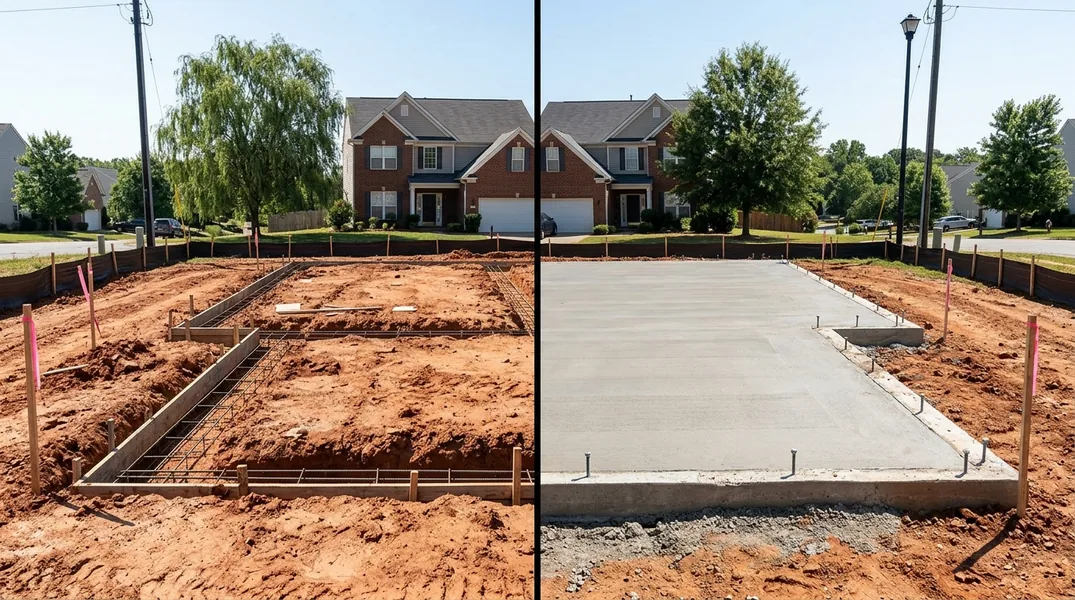
Understanding New Construction Concrete Slabs in Charlotte
Buying a new home is one of the most significant investments you'll make, and the foundation literally supports everything else. For homebuyers in Charlotte, understanding the concrete slab beneath your new build is essential before you sign closing documents. A properly installed slab will last decades, but shortcuts taken during construction can lead to costly repairs down the road.
New construction concrete slabs in the Charlotte area are typically four to six inches thick and rest on a prepared base of gravel and compacted soil. The slab serves as the foundation for your home's structural integrity, and it also supports everything from your flooring to your walls and roof. Many homebuyers focus on the visible features of their new home, such as kitchen finishes or paint colors, but they overlook the concrete slab entirely. This is a mistake. The quality of your foundation directly impacts your home's resale value, energy efficiency, and long-term durability.
Key Signs of a Quality New Home Slab Inspection
When you conduct a new home slab inspection, you're looking for evidence that the concrete was mixed, poured, and finished according to industry standards. A quality slab should have a smooth, relatively even surface with minimal cracks. Small hairline cracks are normal and expected as concrete cures, but larger cracks, particularly those wider than one-eighth inch or longer than a few feet, may indicate structural concerns or poor workmanship.
Pay close attention to the slab's color and texture. Discoloration patterns can indicate uneven curing or moisture issues. The slab should slope gently away from your home's perimeter to encourage water drainage, not toward it. You should also check for any soft spots or areas where the concrete feels spongy when you walk on it, as this suggests poor compaction of the base or inadequate concrete thickness. Look at the edges where the slab meets the foundation wall. There should be a clean transition without gaps, which could allow water infiltration or pest entry.
Drainage and Moisture Control in New Build Foundation Questions
One of the most critical aspects of new build foundation questions involves drainage. Charlotte experiences significant rainfall, particularly during spring and summer months, so proper drainage around your concrete slab is non-negotiable. Before closing, verify that the builder has installed a proper drainage system, including perimeter drains and a sump pump if necessary. Ask your builder or inspector whether the slab includes a vapor barrier underneath, which prevents moisture from wicking up from the soil into your home.
Moisture problems can manifest as efflorescence, a white powdery substance on the concrete surface, or as dampness in your basement or crawlspace. These issues don't just affect your comfort; they can lead to mold growth, structural damage, and expensive repairs. During your inspection, look for any standing water or evidence of water damage around the slab's perimeter. Check the grading around your home to ensure soil slopes away from the foundation, and confirm that gutters and downspouts direct water at least four to six feet away from the house. If you notice any concerns about drainage or moisture, contact Charlotte Concrete Pros at (980) 890-4168 for a professional assessment before you close on your new home.
Common Defects Found in New Construction Concrete Slabs
Even though new construction slabs should be built to code, defects do occur. One common issue is inadequate concrete strength, which happens when the concrete mix design doesn't meet specifications or when the concrete wasn't properly cured. Another frequent problem is poor finishing, which leaves the surface rough, uneven, or susceptible to spalling (flaking or chipping of the concrete surface). Settling and differential movement can also occur if the base preparation was inadequate or if soil conditions weren't properly assessed before construction began.
Cracking patterns tell a story. Diagonal cracks radiating from corners often indicate settlement or structural stress. Cracks that follow the perimeter might suggest that the concrete was poured in sections without proper control joints, or that the base wasn't uniformly compacted. Alligator cracking, which resembles the skin of an alligator, typically indicates that the concrete was too thin or that the subgrade wasn't properly prepared. If you observe any of these patterns during your inspection, have a concrete professional evaluate the slab before you commit to purchasing the home. This could save you tens of thousands of dollars in future repairs.
What Questions to Ask Your Builder Before Closing
Before you close on your new home, prepare a list of specific questions about the concrete slab and foundation. Ask your builder for copies of the concrete testing reports, which document the strength and quality of the concrete used. Request details about the concrete mix design, including the water-to-cement ratio and any admixtures that were added. Find out who performed the concrete work, whether they're licensed, and if they carry liability insurance. Ask about the base preparation, including the depth and type of gravel used, and how the subgrade was compacted.
Inquire about the curing process and timeline. Concrete should cure for at least seven days before heavy loads are placed on it, and ideally for 28 days to reach full strength. Ask whether any accelerators or other chemicals were used to speed up the curing process, as these can sometimes compromise long-term durability. Request information about any warranties on the concrete slab and what defects are covered. Finally, ask your builder to provide you with maintenance recommendations and a schedule for any follow-up inspections. If your builder is evasive or unwilling to answer these questions, that's a red flag that you should address before closing.
When to Call a Professional for a Concrete Slab Assessment
While you can conduct a visual inspection yourself, hiring a professional concrete inspector or structural engineer to evaluate your new home's slab is money well spent. A professional will use specialized equipment to measure concrete thickness, assess compaction of the base, and identify potential issues that might not be visible to the untrained eye. They can also perform ground-penetrating radar to detect voids or areas of poor compaction beneath the slab surface. If you're buying a new home in Charlotte and you're concerned about the quality of the concrete work, Charlotte Concrete Pros can provide expert guidance. Call (980) 890-4168 to discuss your concerns and get a free estimate for a professional assessment.
Even if you don't notice obvious problems, a professional inspection can identify minor issues before they become major headaches. Small cracks can be addressed with Concrete Repair and Resurfacing services to prevent water infiltration and further deterioration. Sealing the slab with an appropriate concrete sealer can also extend its lifespan and protect it from weathering, staining, and moisture damage. Don't skip this step. The cost of a professional inspection is minimal compared to the potential cost of addressing foundation problems years down the road.
Looking for a professional concrete contractor in Charlotte? Charlotte Concrete Pros responds fast for all your concrete needs.
Get a Free QuoteOur services: Concrete Driveways · Concrete Patios · Stamped & Decorative Concrete