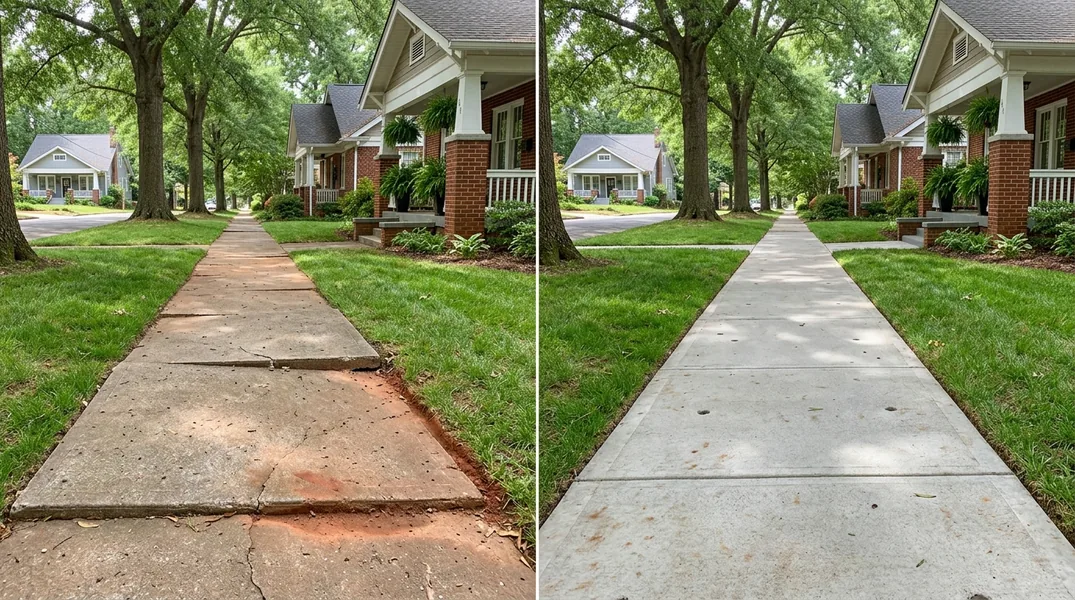
Understanding Piedmont Red Clay and Its Impact on Concrete
If you own a home in Charlotte, you've likely noticed something unique about the soil beneath your feet. The distinctive reddish tint isn't just for show. Piedmont red clay, which dominates the geological landscape of the Carolinas, is one of the most challenging soil types for concrete construction and longevity. This clay is rich in iron oxide, which gives it that characteristic rust-like color, but it also carries properties that make it particularly aggressive toward concrete structures.
The real problem isn't the color, it's the clay's behavior when exposed to moisture and temperature changes. Piedmont clay is what geotechnical engineers call a high-plasticity clay, meaning it dramatically expands when wet and shrinks when dry. This constant cycle of swelling and contraction places enormous stress on any concrete structure built on top of it. Over time, this movement causes the concrete to crack, settle unevenly, and develop the kinds of problems that lead homeowners to search for Concrete Repair & Resurfacing solutions. Understanding this soil behavior is the first step toward protecting your investment.
The Shrink-Swell Cycle: How Clay Destroys Concrete Driveways
The shrink-swell cycle is the primary culprit behind concrete damage in Charlotte homes built on Piedmont clay. During heavy rains or humid summer months, the clay absorbs water and expands significantly. This expansion pushes upward against the concrete surface with tremendous force. Then, during dry periods or winter months, the same clay loses moisture and shrinks, creating voids beneath the concrete. The concrete, unable to support itself across these gaps, sags and cracks. This isn't a one-time event, it happens repeatedly, year after year, with each seasonal change intensifying the damage.
What makes this cycle particularly destructive is that it's largely invisible until significant damage has already occurred. A Concrete Driveways system might look fine on the surface while the foundation beneath it is already failing. Homeowners often don't notice problems until they see obvious signs like step cracking (stair-step patterns across the concrete), horizontal displacement, or a driveway that's noticeably higher on one side than the other. By that point, the clay has already gone through multiple expansion and contraction cycles. This is why early intervention and proper construction techniques are so critical in the Charlotte area.
Red Clay Concrete Damage in Charlotte: Common Warning Signs
Recognizing the early signs of clay-related concrete damage can save you thousands of dollars in repairs. The most common indicator is a pattern of cracks that look like stair steps running diagonally across your driveway or patio. These aren't random, they follow the stress lines created by uneven soil movement. You might also notice that one section of your concrete is noticeably higher or lower than an adjacent section, a condition called 'heaving' or 'settling.' Another telltale sign is when concrete begins to pull away from attached structures like your garage foundation or house perimeter.
Additional warning signs include small ponds of water that collect on your driveway after rain, which indicates the surface has begun to slope unevenly. You might also notice that cracks widen and narrow with the seasons, becoming more pronounced during wet periods. If you're seeing any of these issues, it's time to reach out to a professional. Charlotte Concrete Pros serves the Charlotte area and can assess whether your damage is clay-related and recommend the best repair strategy. Contact us at (980) 890-4168 to schedule a free estimate.
Prevention Strategies: Building Concrete to Last in Piedmont Soil
The best approach to dealing with Piedmont clay is prevention. When Charlotte Concrete Pros installs new concrete, we account for local soil conditions from the very beginning. Proper site preparation is essential. This includes removing the top layer of clay and replacing it with engineered fill material that has better drainage and stability characteristics. We also ensure adequate slope for water drainage away from the concrete surface, preventing water from pooling and being absorbed into the clay below.
Another critical prevention strategy is installing a proper base layer beneath the concrete. A well-compacted base of gravel or recycled asphalt helps distribute weight more evenly and provides better drainage. We also recommend considering reinforcement options like rebar or wire mesh, which help concrete resist the stress created by soil movement. For homeowners concerned about long-term durability in Charlotte's clay-heavy soil, investing in these preventive measures during initial installation is far more cost-effective than dealing with repairs later. If you're planning a new driveway or patio project, discussing these clay-specific strategies with a local expert is crucial.
Concrete Repair Options for Clay-Damaged Driveways Near Me
If your driveway is already showing signs of clay-related damage, you have several repair options depending on the severity. For minor cracks and surface issues, Concrete Repair & Resurfacing can extend the life of your concrete significantly. This process involves cleaning out damaged areas, applying specialized patching compounds, and resurfacing the top layer. These solutions work best when damage is caught early and hasn't yet affected the structural integrity of the entire slab.
For more severe cases involving significant settling, heaving, or widespread cracking, concrete replacement may be the only viable long-term solution. While this is a larger investment, it gives you the opportunity to implement the prevention strategies mentioned above, ensuring your new concrete is built to withstand Piedmont clay's unique challenges. The team at Charlotte Concrete Pros can evaluate your specific situation and recommend whether repair or replacement makes the most sense for your property. Every driveway is different, and the best solution depends on factors like the extent of damage, the age of the concrete, and your long-term plans for the property. For a professional assessment, call us at (980) 890-4168 or request a free estimate online.
Protecting Your Investment: Maintenance Tips for Charlotte Homeowners
Even with proper installation and repair, ongoing maintenance is essential for concrete longevity in Charlotte's clay-heavy environment. One of the most important steps is managing water around your concrete. Keep gutters clean and ensure downspouts direct water at least 4 to 6 feet away from your driveway or patio. Avoid allowing water to pool or stand on the concrete surface for extended periods. During heavy rains, the goal is to help water drain away quickly rather than allowing it to soak into the clay below.
Seal your concrete every 2 to 3 years with a quality concrete sealer. This creates a protective barrier that reduces water penetration, which in turn minimizes the clay's ability to absorb moisture and expand. You should also avoid applying salt or harsh de-icing chemicals during winter, as these can accelerate concrete deterioration and are particularly problematic when combined with clay soil movement. Regular inspection is equally important. Walk your driveway quarterly and look for new cracks or changes in surface elevation. Catching problems early makes repairs simpler and less expensive. By staying proactive with maintenance, you can significantly extend the life of your concrete investment in Charlotte's challenging soil conditions.
Looking for a professional concrete contractor in Charlotte? Charlotte Concrete Pros responds fast for all your concrete needs.
Get a Free QuoteOur services: Concrete Driveways · Concrete Patios · Stamped & Decorative Concrete